01206 544333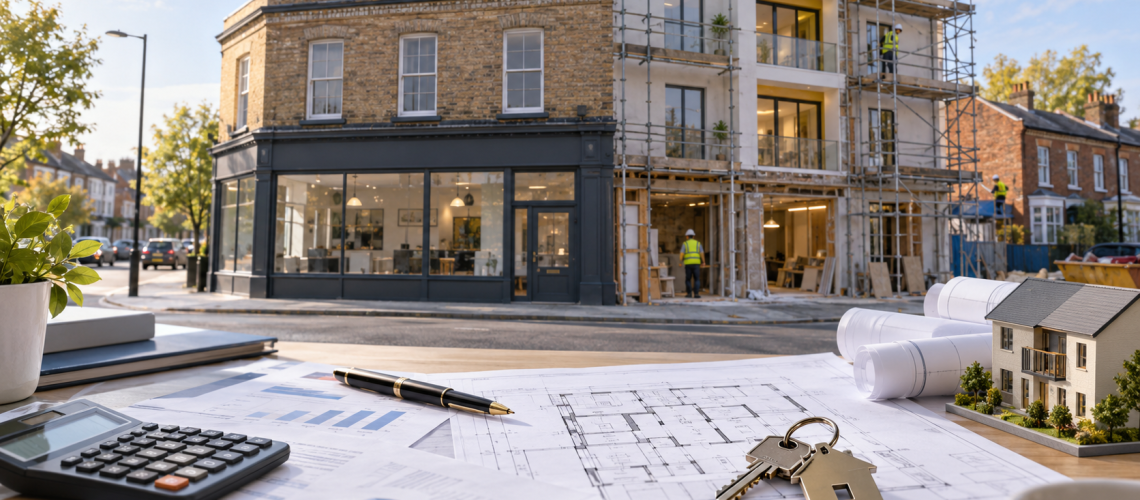
Converting commercial or semi-commercial property into residential accommodation can offer property investors several opportunities.
There may be potential to create additional housing, increase the value of an underused building, generate rental income and reposition a property that is no longer performing well in its existing use.
There can also be an important Stamp Duty Land Tax consideration at the point of purchase.
Where a property is genuinely non-residential or mixed-use when it is acquired, the purchase may be subject to the non-residential and mixed-use rates of Stamp Duty Land Tax rather than residential rates.
For property investors, this can make a significant difference to the amount of tax payable at completion, particularly when compared with the higher SDLT rates that can apply when buying an additional residential property.
However, the property needs to qualify based on its position at the time of the transaction. Simply planning to convert a residential property into something else, or describing a property as commercial, does not determine its SDLT treatment.
.
What is non-residential or mixed-use SDLT?
Stamp Duty Land Tax, usually shortened to SDLT, applies to property purchases in England and Northern Ireland.
Commercial property such as shops and offices falls within the non-residential SDLT rules.
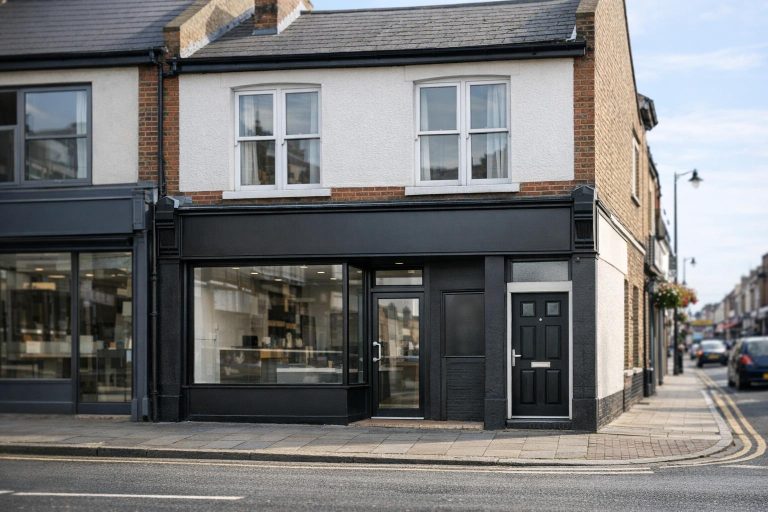
Mixed-use property contains both residential and non-residential elements. A common example is a shop with a flat above it.
HMRC currently applies the following SDLT rates to freehold non-residential and mixed-use purchases:
- 0% on the first £150,000
- 2% on the portion from £150,001 to £250,000
- 5% on the portion above £250,000
These rates are different from residential SDLT rates.
This can be particularly relevant to investors buying property with the intention of carrying out a residential conversion.
.
Why can the SDLT saving be significant for property investors?
Residential investors will often be buying an additional property rather than their only home.
Since 1 April 2025, the higher residential SDLT rates for an additional property start at 5% on the first £125,000, rising through the different price bands.
Genuine mixed-use property is not treated as an additional residential property for these higher-rate rules. HMRC specifically gives the example of a shop with a flat above as a mixture of residential and non-residential property.
That can create a substantial difference in the initial acquisition cost.
.
An example at £500,000
Consider an investor buying a property for £500,000.
If the purchase genuinely qualifies for non-residential or mixed-use SDLT rates, the calculation would currently be:
- First £150,000 at 0% = £0
- Next £100,000 at 2% = £2,000
- Remaining £250,000 at 5% = £12,500
Total SDLT = £14,500
If the same £500,000 purchase were an additional residential property subject to the higher residential rates, the calculation would currently be:
- First £125,000 at 5% = £6,250
- Next £125,000 at 7% = £8,750
- Remaining £250,000 at 10% = £25,000
Total SDLT = £40,000
In this example, the difference is £25,500.
The calculation is illustrative and the correct SDLT treatment will always depend on the individual transaction, purchaser and property. Current higher residential rates are confirmed by HMRC.
.
Commercial property being converted to residential
A completely commercial property can be particularly interesting to investors looking for conversion opportunities.
Examples could include an empty office, shop, former business premises or another commercial building where the investor plans to create residential accommodation.
If the property is genuinely non-residential at the time of purchase, the non-residential SDLT rates may apply even though the investor ultimately intends to convert the building into homes.
This is an important distinction.
HMRC guidance states that whether a building is residential is assessed at the time of the land transaction. The purchaser’s future intention does not by itself determine whether the building is residential or non-residential.
The proposed conversion still needs to work from a planning, construction and finance perspective, but the intended future residential use does not automatically mean residential SDLT rates apply to a property that is genuinely commercial when purchased.
.
What about semi-commercial or mixed-use property?
Semi-commercial property can offer a similar opportunity.
A typical example could be a shop with residential accommodation above it.
The investor might buy the entire building and subsequently explore converting the commercial element into additional residential accommodation, subject to the necessary planning and legal requirements.
At the point of purchase, the building may contain both:
- A genuine commercial element
- Existing residential accommodation
HMRC describes this type of property as mixed-use and applies the non-residential and mixed-use SDLT rates to qualifying transactions.
This can make the acquisition costs quite different from buying a conventional residential investment property.
It is also one reason some investors look beyond standard buy-to-let opportunities and consider mixed-use buildings where there is potential to add value.
.
The property must genuinely qualify
Investors should not assume that a property automatically attracts the lower rates simply because part of it looks commercial.
The SDLT classification depends on the facts of the transaction.
HMRC looks at whether the property is used or suitable for use as a dwelling at the time of the transaction. Where a building contains a genuinely separate commercial or business area alongside residential accommodation, the transaction can potentially be mixed-use.
The distinction can become more complicated where:
- A former commercial area has already been converted to residential use
- Conversion works are already underway
- The alleged commercial area is actually part of a dwelling
- The building has changed use before completion
- Planning status and physical use do not appear to match
- There is uncertainty over whether part of the property is genuinely non-residential
The SDLT position should therefore be checked with an appropriate tax or legal adviser before exchange or completion.
Advocate Finance can advise on the property finance, but does not provide tax advice.
.
What if residential conversion work has already started?
Timing can matter. The SDLT definition of residential property can include a building that is in the process of being constructed or adapted for use as a dwelling.
This means an investor should not assume that a former commercial building will necessarily remain non-residential for SDLT purposes if residential conversion work has already progressed before the transaction takes place.
This is another reason to obtain specialist advice on the exact property and transaction rather than relying simply on its historic use.
A former office is not automatically commercial for SDLT forever, just as a future intention to convert an existing commercial building does not automatically make it residential at purchase.
The facts at the time of the transaction matter.
.
Lower SDLT can improve the project numbers
For a conversion project, every acquisition cost affects the overall return.
Investors normally need to budget for the purchase price, SDLT, legal fees, valuation costs, finance costs, refurbishment or conversion works and a contingency for unexpected expenditure.
If the purchase legitimately attracts non-residential or mixed-use SDLT rates, the lower acquisition tax can leave more capital available for the project itself.
That could potentially be used towards:
- Conversion or refurbishment costs
- Professional fees
- Planning and building control costs
- Finance deposits
- Interest and other finance costs
- Project contingency
This does not make a poor project a good investment by itself, but lower acquisition costs can materially change the overall financial appraisal.
.
Financing a commercial to residential conversion
The finance used to purchase the property may be different from the mortgage used once the conversion has been completed.
A standard residential buy-to-let mortgage may not be suitable at the beginning because the property is still commercial, mixed-use, vacant or undergoing substantial work.
Depending on the project, finance options could include bridging finance, refurbishment finance or development finance.
A typical strategy might be to purchase the property using short-term finance, complete the conversion works and then refinance once the new residential units have been completed and are suitable for a long-term mortgage.
The correct route depends on the extent of the works, planning position, property value, borrower experience and intended exit.
.
Semi-commercial to residential conversion
A semi-commercial conversion can require slightly different planning because part of the building may already be producing residential or commercial income.
For example, an investor might purchase a building consisting of a shop with two flats above.
The existing flats may already produce rental income, while the investor intends to convert the shop into another residential unit, subject to obtaining the appropriate permissions.
The finance needs to take account of the existing property, the proposed works and what the building will become after conversion.
This could involve:
- Financing the original mixed-use acquisition
- Funding the conversion works
- Managing any existing residential or commercial tenancies
- Refinancing once the property is entirely residential
Planning the purchase finance and eventual exit together can help avoid problems later.
.
Planning permission and permitted development
A Stamp Duty advantage does not mean the property can automatically be converted into residential accommodation.
Planning rules are separate from SDLT.
Depending on the existing property, location and proposed conversion, the investor may need planning permission or may be able to use permitted development rights.
Building regulations, lease restrictions, title conditions and other legal considerations may also apply.
Investors should establish whether the proposed conversion is realistic before committing to the purchase.
The fact that a property is attractive from an SDLT perspective should never replace proper development and planning due diligence.
.
Look at the entire project, not just the tax saving
A potential Stamp Duty saving can be attractive, particularly where there is a large difference between non-residential rates and the higher residential rates an investor might otherwise pay.
However, SDLT should only be one part of the investment decision.
Before purchasing a commercial or semi-commercial property for conversion, investors should consider:
- Purchase price and SDLT
- Planning and permitted development position
- Conversion and refurbishment costs
- Expected end value
- Expected rental income
- Finance costs
- Timescale for the works
- Demand for the finished residential accommodation
- Long-term mortgage options
- Exit strategy
The strongest projects are those where the property, planning, finance, conversion costs and eventual rental or sale value all work together.
.
How Advocate Finance can help
Advocate Finance works with property investors looking to purchase and convert commercial and semi-commercial property.
The finance required at acquisition may be very different from the long-term mortgage required after the conversion is complete.
Depending on the project, Advocate Finance can help assess options including bridging finance, refurbishment finance, development finance and longer-term property investment mortgages.
We can also look at the proposed exit before the initial finance is arranged, helping investors understand how the property may be refinanced once the residential conversion is complete.
The SDLT position itself should always be confirmed by an appropriately qualified tax or legal adviser.
If you are considering purchasing a commercial or semi-commercial property for residential conversion, speak to Advocate Finance before committing to the purchase.
Contact Advocate Finance for a free initial assessment.
.
.
FAQs
Do you pay residential Stamp Duty when buying a commercial property to convert into flats?
Not necessarily. If the property is genuinely non-residential at the time of the land transaction, non-residential SDLT rates may apply even if the purchaser intends to convert it into residential accommodation later. Specialist tax advice should be obtained for the individual transaction.
Is Stamp Duty lower on commercial property?
Non-residential SDLT uses different rates from residential property. The current maximum rate for the purchase price of a non-residential freehold property is 5%, whereas residential rates can be higher, particularly for additional residential properties.
Does a shop with a flat above qualify for commercial Stamp Duty rates?
A genuine shop with a flat above can be classed as mixed-use property. HMRC applies non-residential and mixed-use SDLT rates to qualifying mixed-use transactions.
Can I buy a commercial property and convert it to residential?
Potentially, but the conversion will depend on the property, planning position, permitted development rights where applicable, building regulations and any other legal restrictions.
Does planning to convert the property affect the SDLT rate?
Future intention alone does not determine whether a property is residential or non-residential. HMRC assesses the use and suitability of the property at the time of the transaction. However, a building already being constructed or adapted for residential use can fall within the residential definition.
Can Advocate Finance fund a commercial to residential conversion?
Advocate Finance can help assess finance options for commercial and semi-commercial conversion projects, including bridging, refurbishment and development finance, together with possible refinance options once the project is completed.