01206 544333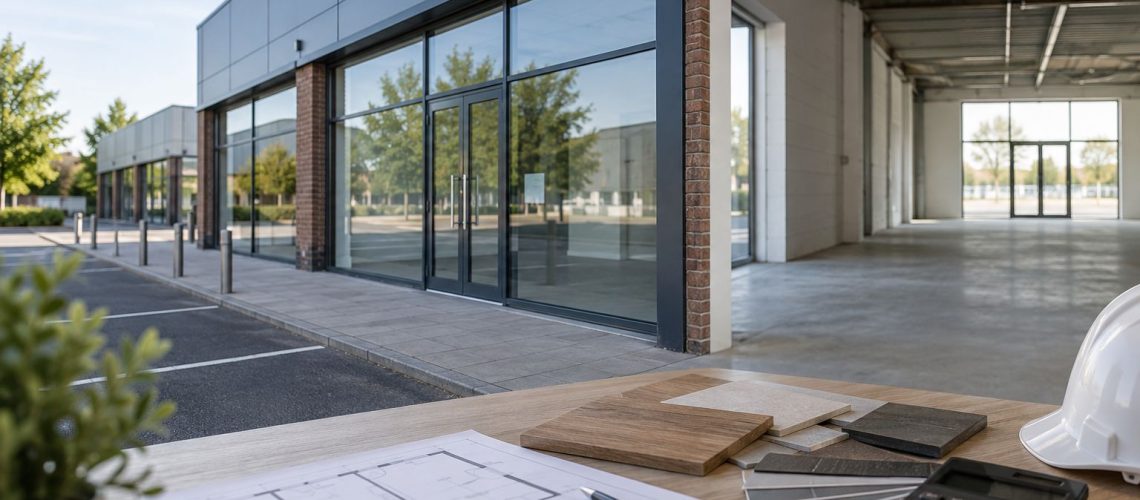
A vacant commercial property can be both an opportunity and a challenge.
For property investors, business owners and developers, an empty shop, office, warehouse, industrial unit or hospitality premises may offer scope to add value, secure a new tenant, refurbish the building, or occupy the property through their own business.
However, a vacant commercial property can also be more difficult to finance than a fully let commercial investment.
The reason is simple. If there is no tenant and no rental income, the lender has to look more closely at the borrower, the property, the plan for the building and the exit strategy.
This does not mean finance is unavailable. It means the right finance route depends on why the property is vacant and what the borrower intends to do with it.
.
Why might a commercial property be vacant?
A commercial property can be vacant for many reasons.
The previous tenant may have left at the end of a lease, the property may need refurbishment, the rent may have been set too high, or the building may no longer suit the needs of local businesses.
In other cases, the property may be empty because it is being sold for redevelopment, conversion, owner occupation, or a new commercial use.
For investors, this can create opportunity. A vacant property may be available at a lower price than a fully let commercial investment, and there may be scope to improve the building, secure a stronger tenant and increase the rental value.
However, vacancy also creates risk. Until the property is occupied or producing income, the borrower may need to cover finance costs, insurance, maintenance, business rates and other holding costs.
.
Why lenders look closely at vacant commercial property
Commercial mortgage lenders usually want to understand how the loan will be supported.
For a commercial investment property, the rental income from the tenant is often a key part of the lender’s assessment. If the property is vacant, there may be no lease, no tenant covenant and no rent to support the borrowing.
This can make the application more detailed.
A lender may want to understand:
- Why the property is vacant
- How long it has been empty
- Whether there is local demand for that type of property
- What rent may be achievable
- Whether refurbishment is needed
- Whether the borrower has commercial property experience
- How finance costs will be covered
- What the exit strategy looks like
A vacant commercial property does not automatically make a case unfinanceable, but it can reduce the number of suitable lenders.
.
Investment property or owner-occupied premises
One of the first questions is whether the property is being bought as an investment or for the borrower’s own business.
If the borrower is buying a vacant commercial property to let to a tenant, the lender will usually focus on the property, the expected rental demand, the borrower’s experience and the plan for finding a suitable occupier.
If the borrower’s own business will occupy the property, the lender may assess the trading business instead. This could involve reviewing accounts, bank statements, trading history, profitability and affordability.
The same vacant property may therefore be viewed differently depending on the borrower’s intended use.
For example, an empty office bought by a profitable business for its own occupation may be assessed differently from an empty office bought by an investor who still needs to find a tenant after completion.
.
Can you get a commercial mortgage on a vacant property?
It may be possible to get a commercial mortgage on a vacant property, but the options will depend on the case.
A lender may be more comfortable if the borrower has strong experience, a clear letting strategy, good supporting income, a strong deposit position, or a credible business plan for owner occupation.
However, where the property is empty, needs work, has uncertain rental demand, or cannot yet support a long-term mortgage, the borrower may need to consider a different structure first.
In some cases, a commercial mortgage may be suitable from the start. In others, bridging finance or refurbishment finance may be more appropriate until the property is improved, occupied, let or ready for refinance.
The important point is not just whether finance is available. It is whether the finance matches the property and the borrower’s plan.
.
When might bridging finance be suitable?
Bridging finance may be considered where a vacant commercial property is not ready for a standard commercial mortgage.
This can be relevant where the property needs refurbishment, the borrower needs to complete quickly, the property is being bought at auction, or the lender wants the property to be let before offering a longer-term mortgage.
A typical strategy may involve buying the property with short-term finance, carrying out the required works, securing a tenant, then refinancing onto a longer-term commercial mortgage once the property is income-producing.
This route can be useful, but it depends on a clear exit strategy.
The borrower should understand how the bridging loan will be repaid before committing to the purchase. The exit may be refinance, sale, or another agreed repayment route.
.
Refurbishing a vacant commercial property
Many vacant commercial properties need work before they can attract the right tenant or support the intended rent.
This may be light refurbishment, such as improving décor, flooring, lighting, heating or basic facilities. It may also be heavier work, such as structural repairs, layout changes, compliance upgrades, or preparing the building for a different type of occupier.
Refurbishment can improve the property’s appeal, but the numbers need to be assessed carefully.
Before starting, investors should consider:
- The cost of works
- Whether planning permission or building regulations are needed
- How long the property may remain empty
- The likely rent after refurbishment
- The likely valuation after works
- The finance costs during the project
- The refinance route once the property is ready
A refurbishment plan should be based on realistic rental demand, not just the assumption that an improved property will automatically let quickly.
.
Vacant commercial property bought at auction
Auction can be a common route for investors looking at vacant commercial property.
The attraction is often speed, pricing and the chance to buy a property that may need improvement or repositioning. However, auction also brings strict deadlines and added risk.
A vacant commercial property bought at auction may have legal, title, planning, condition or tenancy issues that need to be understood before bidding.
The buyer should review the legal pack, check the funding route and understand the exit strategy before committing. If a standard commercial mortgage is unlikely to complete within the required timescale, bridging finance may need to be considered before the auction.
The worst position is to win the bid and only then discover that the finance route is unsuitable.
.
Business rates and holding costs
Holding costs are particularly important with vacant commercial property.
If the property is empty, there may be no rent coming in, but the owner may still have ongoing costs to cover.
These may include:
- Finance payments
- Insurance
- Maintenance and security
- Utilities or standing charges
- Service charges, where applicable
- Business rates, where applicable
- Professional fees
- Marketing and letting costs
- Refurbishment costs
- Contingency for delays
Business rates should be checked carefully. Empty commercial property relief may apply for a limited period, but rates can become payable again if the property remains vacant.
This can have a direct impact on cash flow, especially if the investor expects the unit to take time to let.
.
Planning, use and change of use
The current and proposed use of the property can also affect the finance options.
A vacant commercial property may be suitable for its existing use, or the borrower may want to change the way the building is used. This could include moving between different commercial uses, converting part of the building, or exploring residential conversion, subject to planning and permitted development rules.
Lenders will want to understand what the property is now, what it will be used for, and whether the borrower has the required permissions or approvals.
If planning permission, building regulations or change-of-use matters are unresolved, the finance position may become more complex.
This does not always prevent borrowing, but it may affect which lenders are suitable and whether short-term finance is needed first.
.
What lenders may want to see
A vacant commercial property application is usually stronger when the borrower can present a clear plan.
The lender needs to understand the property, the borrower, the reason for the vacancy and how the loan will be supported.
Useful information may include:
- Details of the property and current condition
- Reason for the vacancy
- Evidence of local tenant demand
- Estimated market rent
- Refurbishment plans and costs
- Borrower experience
- Business accounts, if owner-occupied
- Deposit source
- Valuation expectations
- Exit strategy
The more clearly the case is presented, the easier it is to identify lenders that may be comfortable with the risk.
.
Can vacant commercial property still be a good investment?
A vacant commercial property can still be a good investment, but only if the risk is properly understood.
It may suit an investor who understands the local market, has a realistic plan for improving or letting the property, and can manage the holding costs while the building is empty.
It may be less suitable where the borrower is relying on immediate rental income, has not allowed for refurbishment costs, or has no clear route to refinance or sale.
The property should be assessed on more than the purchase price. Investors should consider the cost of works, expected rental income, likely demand, business rates, finance costs and the exit strategy.
A low purchase price alone does not make a vacant commercial property a good deal.
.
How Advocate Finance can help
Advocate Finance works with property investors, landlords, developers and business owners looking to finance commercial property.
Where a commercial property is vacant, the right finance route will depend on the building, the borrower, the reason for the vacancy, the proposed use, the condition of the property and the exit strategy.
Advocate Finance can help assess whether a commercial mortgage may be suitable, or whether bridging finance, refurbishment finance, auction finance or another specialist route should be considered first.
We can also help identify lenders that are more comfortable with vacant commercial property, commercial investment, owner-occupied premises and more complex property scenarios.
If you are considering buying or refinancing a vacant commercial property, speak to Advocate Finance before committing to the purchase.
Contact Advocate Finance for a free initial assessment.
.
.
FAQs
Can you get finance on a vacant commercial property?
Yes, it may be possible. The options will depend on the property, borrower, condition, intended use, deposit, income position and lender criteria.
Is it harder to finance a vacant commercial property?
It can be harder because there may be no tenant or rental income in place. Lenders will usually want to understand the reason for the vacancy and how the loan will be supported.
Can bridging finance be used for vacant commercial property?
Yes, bridging finance may be considered where the property is vacant, needs work, has been bought at auction, or is not ready for a standard commercial mortgage.
Can I refinance once the commercial property is let?
It may be possible to refinance once the property is let and producing income. The refinance will depend on valuation, lease terms, rental income, borrower profile and lender criteria.
Can I buy a vacant commercial property for my own business?
Yes, it may be possible. If the borrower’s own business will occupy the property, the lender may assess the trading business, accounts, bank statements and affordability.
What should I check before buying a vacant commercial property?
You should check the reason for vacancy, condition, planning use, business rates, likely tenant demand, refurbishment costs, finance options and exit strategy before committing to the purchase.