01206 544333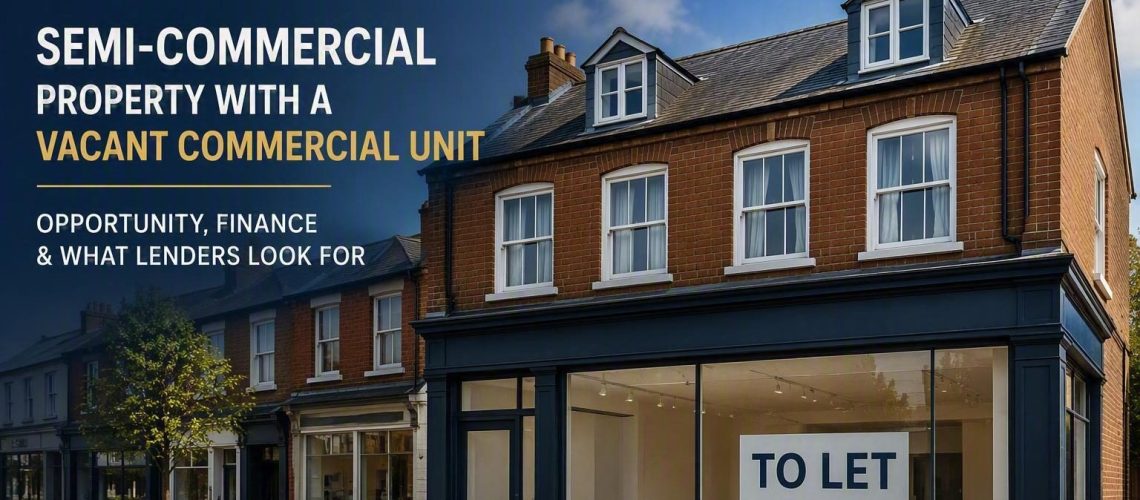
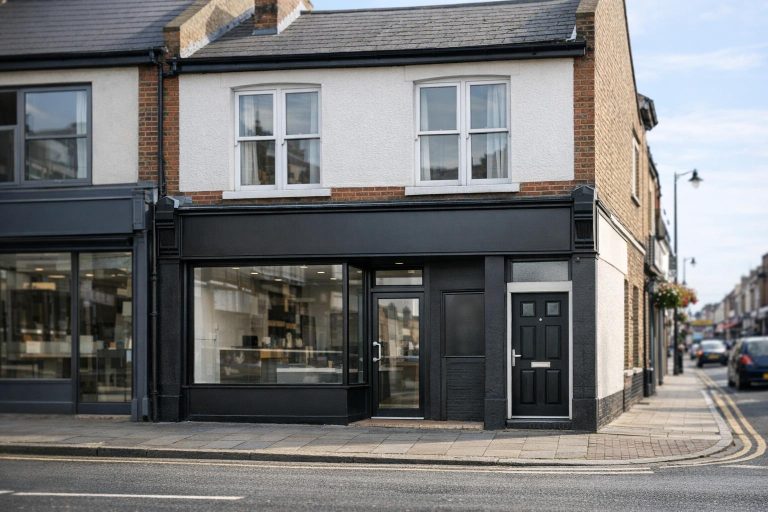
A semi-commercial property with a vacant commercial unit can look like an attractive investment opportunity.
The residential part of the property may already be let, while the empty commercial space could offer scope to add value, find a new tenant, refurbish the unit, or improve the overall rental income.
However, a vacant commercial unit can also make the finance more complicated.
Some lenders may be cautious because the property is not fully income-producing at the point of purchase or refinance. Others may still consider the case, but they will want to understand the property, the borrower, the plan for the vacant unit and the overall repayment strategy.
The key question is not simply whether the unit is empty. It is whether there is a clear and realistic plan for the commercial space.
.
What is a semi-commercial property?
A semi-commercial property is a mixed-use property that includes both commercial and residential elements.
Common examples include:
- A shop with a flat above
- An office with residential accommodation
- A restaurant or takeaway with flats above
- A retail unit with multiple residential units
- A mixed-use investment property with commercial and residential tenants
Because these properties are not purely residential or purely commercial, lenders assess them differently from a standard buy-to-let property.
The residential element, commercial element, rental income, lease terms, property condition and borrower profile can all affect the finance options available.
.
Why might a vacant commercial unit be attractive?
A vacant commercial unit can create opportunity, especially for an investor who understands the local market.
The unit may be empty because the previous tenant has left, the space needs refurbishment, the rent needs to be repositioned, or the owner has not actively marketed it.
For the right buyer, this may create the chance to improve the property and increase income.
A vacant unit could potentially allow an investor to:
- Refurbish the commercial space
- Let the unit to a stronger tenant
- Improve the rental income
- Reposition the property
- Add value before refinancing
- Explore alternative uses, subject to planning and consent
This is why some investors are prepared to consider semi-commercial properties that other buyers may avoid.
However, the opportunity needs to be balanced against the risk, costs and funding position.
.
Why lenders may be cautious
Lenders usually want to understand how the mortgage will be supported.
If the commercial unit is vacant, there may be no commercial rent in place at the time of the application. This can make affordability harder to assess, particularly if the commercial element represents a large part of the property’s value or expected income.
A lender may ask:
- Why is the unit vacant?
- How long has it been empty?
- Is there demand for this type of unit locally?
- What rent is realistically achievable?
- Does the unit need refurbishment?
- Is the proposed rent supported by market evidence?
- Does the borrower have experience with commercial property?
- Is there residential income to support the mortgage?
- What is the exit strategy if the unit remains vacant?
A vacant commercial unit does not automatically make the property unfinanceable, but it can reduce the number of lenders available.
.
Can the residential income support the mortgage?
In some cases, the residential part of the property may already be let and producing income.
This can help support the application, particularly if the flats are self-contained, properly let and producing reliable rent. However, lenders will still assess the full property, including the vacant commercial unit.
A property with strong residential income and a small vacant shop may be viewed differently from a property where the empty commercial unit accounts for a large proportion of the value or expected rent.
Each case will depend on the property, valuation, rental income and lender criteria.
.
Owner-occupier or investment property
The reason for buying the property can also affect the finance route.
If the borrower’s own business plans to occupy the vacant commercial unit, the lender may assess the trading business as part of the application. This could involve reviewing accounts, bank statements, business performance and affordability.
If the property is being bought as an investment, the lender may focus more heavily on rental income, local tenant demand and the plan to let the unit.
The right lender may be different depending on whether the vacant unit will be:
- Occupied by the borrower’s own business
- Let to a new commercial tenant
- Refurbished before being let
- Changed in use, subject to planning
- Refinanced after improvement
This is why the strategy should be clear before approaching lenders.
.
What lenders may want to see
Where a semi-commercial property includes a vacant commercial unit, the application is usually stronger when the borrower can provide clear supporting information.
This may include:
| Evidence of residential rental income | Refurbishment plans and costs |
| Details of the vacant commercial unit | Borrower experience |
| An explanation of why the unit is vacant | Deposit source |
| Local demand for similar commercial units | Property valuation expectations |
| Estimated market rent | Exit strategy if short-term finance is being used |
The aim is to help the lender understand the risk, the income position and the borrower’s plan for the property.
.
Refurbishment and letting plans
If the commercial unit needs work, the borrower should have a realistic view of the cost, timescale and likely rental value after refurbishment.
A lender may want to know whether the works are cosmetic, structural or part of a wider change of use. They may also consider whether the property is usable in its current condition.
For more straightforward cases, a semi-commercial mortgage may still be possible. For more complex cases, short-term finance or bridging finance may be more suitable at the start.
This may apply where:
- The property needs refurbishment
- The commercial unit is not currently lettable
- A tenant needs to be found
- The buyer needs to complete quickly
- The property is being bought at auction
- The borrower plans to refinance once the unit is let
The finance structure should match the plan for the property.
.
Costs to consider
A vacant commercial unit may create additional costs while the borrower is trying to find a tenant.
These can affect cash flow and should be considered before purchase.
Costs may include:
| Mortgage payments | Business rates, where applicable |
| Insurance | Marketing and letting agent fees |
| Maintenance and repairs | Refurbishment costs |
| Utility standing charges | Professional fees |
| Service charges, if applicable | Void period contingency |
Business rates are an important point to check before buying, especially if the commercial unit may remain vacant for several months. Empty commercial property relief may only apply for a limited period before rates become payable again, depending on the property and circumstances.
The investor should make sure the figures still work if the commercial unit remains empty for longer than expected.
.
When might bridging finance be considered?
Bridging finance may be considered where a standard semi-commercial mortgage is not suitable immediately.
This could be because the commercial unit is vacant, the property needs work, the borrower needs to complete quickly, or the lender wants the unit to be let before offering a longer-term mortgage.
A possible route could be to purchase the property using bridging finance, refurbish or improve the commercial unit, secure a suitable tenant, then refinance onto a longer-term semi-commercial mortgage.
This approach can work in the right circumstances, but it depends on having a clear exit strategy. The borrower should understand how the bridging loan will be repaid before committing to the purchase.
.
Should you buy a semi-commercial property with a vacant commercial unit?
A semi-commercial property with a vacant commercial unit can be worth considering, but it needs careful assessment.
It may suit an investor who understands the local commercial market, has a plan for the vacant unit and can manage the risk of a void period.
It may be more difficult for a borrower who is relying on immediate rental income, has limited commercial property experience, or has not allowed for refurbishment costs and delays.
Before buying, investors should consider:
- Why the unit is vacant
- Whether there is local tenant demand
- What rent is realistic
- Whether refurbishment is needed
- How long it may take to find a tenant
- Whether residential income helps support the mortgage
- Whether short-term finance may be needed first
- What the exit strategy looks like
The property may still be a good opportunity, but the finance should be reviewed before an offer is made.
.
How Advocate Finance can help
Advocate Finance works with landlords, property investors and business owners looking to buy or refinance semi-commercial property.
Where a commercial unit is vacant, the right finance route will depend on the property, borrower, residential income, condition of the commercial space and plans for the unit.
Advocate Finance can help assess whether a semi-commercial mortgage may be suitable, or whether bridging finance, refurbishment finance or another specialist route should be considered first.
We can also help identify lenders that are more comfortable with semi-commercial properties, vacant units and more complex investment scenarios.
Contact Advocate Finance for a free initial assessment before committing to the purchase.
.
FAQs
Can I get a mortgage on a semi-commercial property with a vacant commercial unit?
It may be possible, but lender options can be more limited. The lender will want to understand the property, residential income, vacant unit, borrower profile and plan for the commercial space.
Will lenders use projected commercial rent?
Some lenders may consider projected rent, but this depends on the case. They may want evidence that the rent is realistic and that there is demand for the unit.
Can residential rental income support the application?
Yes, residential income may help support the application. However, lenders will still assess the full property, including the vacant commercial unit.
Is bridging finance better for a vacant commercial unit?
Bridging finance may be considered where the property needs work, the unit needs to be let, or a standard mortgage is not suitable immediately. The borrower will need a clear exit strategy.
What should I check before buying?
You should check the reason for the vacancy, local tenant demand, expected rent, refurbishment costs, business rates position, finance options and likely exit strategy before committing to the purchase.